Your cart
Loading cart...
Your cart
Loading cart...
Events & Workshops
Learn & Explore
Life coaching can be a valuable addition to the toolkit of psychiatrists. By using life coaching techniques to help patients set goals, build resilience and develop the skills they need to thrive, psychiatrists can supplement their clinical work and support patients who are ready to focus on what comes next. The Coaching Academy has trained over 14,000 coaches and is the UK's leading life coaching training academy. Our Life Coaching Diploma is accredited by the AC and ICF, delivered entirely through live online classes, and designed to fit around a working clinical practice.

Life coaching is most effective for psychiatric patients who are stable and managing their condition: those who are ready to look beyond symptom management and focus on what they want their life to look like. For these patients, coaching gives a dedicated space to work on the psychological and emotional dimensions of their recovery that a clinical appointment rarely has time to address.
Motivation and accountability are two areas where psychiatric patients often need more than medication and therapy alone. Coaching gives patients a practical structure for building momentum, setting small achievable goals and following through on them between appointments. Stronger coping skills develop through the same process: coaching helps patients build practical strategies for managing stress, anxiety and other emotions rather than relying entirely on clinical support.
Communication is often affected by mental health conditions, and coaching can help patients improve how they express themselves and relate to the people around them. This connects to self-awareness: coaching helps patients develop insight into how their thoughts, feelings and behaviours interact, which deepens the work they are doing in treatment. Lifestyle factors that affect mental health outcomes such as sleep, stress management and activity levels are also addressed through coaching, giving patients a structured way to make and sustain meaningful changes.
Hear our student stories from psychiatrists and other healthcare professionals about their experiences.

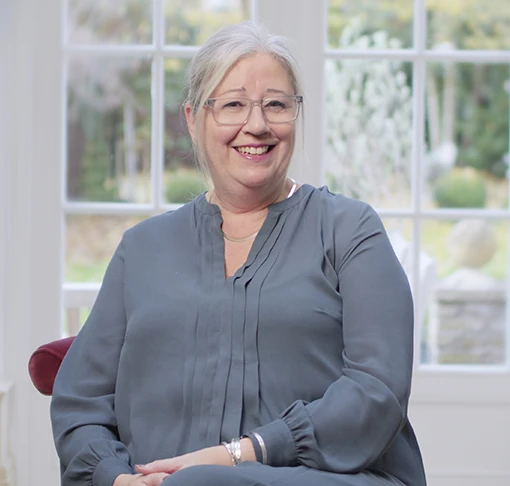
"As a Physiatrist, I've seen first-hand the difference that life coaching can make in my clients' lives. Life coaching complements traditional psychiatric treatment and addresses the psychological, emotional, and lifestyle factors that impact mental health. By combining life coaching with your psychiatry practice, you too can offer a more comprehensive and effective approach to care for your patients, improving their mental health outcomes and enhancing your practice."
Fran, Milton Keynes
Industry-standard accreditations:





Patients who receive both psychiatric treatment and coaching tend to make more consistent progress. Coaching addresses the goal setting and behaviour change that psychiatric treatment points towards but rarely has dedicated time for, which means fewer steps backwards and a clearer path to stability.
Patients who feel invested in their own recovery tend to engage more actively with their treatment. Coaching shifts the dynamic from passive recipient to active participant, which leads to better follow-through between appointments and more meaningful progress over time.
Psychiatry manages symptoms and stabilises. Coaching supports patients in building on that stability: setting goals, developing resilience and creating a sense of direction beyond the condition itself. The two approaches work on different parts of the same recovery journey.
Patients who feel supported in making meaningful changes to their lives, not just in managing their symptoms, tend to feel more satisfied with their care overall. Coaching gives psychiatrists a way to offer that support without changing the clinical relationship.
For patients who are stable and managing their condition well, coaching provides a structured space to focus on what life after acute treatment can look like. It helps them set goals, identify what is getting in the way and build the habits that sustain their recovery.
Sleep, stress, activity and social connection all affect mental health outcomes. Coaching gives patients a practical way to address these lifestyle factors and make sustainable changes, which supports the clinical work rather than duplicating it.
As a psychiatrist, you already have skills that make you an effective coach. You know how to build a therapeutic alliance quickly, how to work with someone whose thinking patterns are getting in their way, and how to hold a space where a person feels safe to explore difficult territory. What a coaching qualification adds is a non-directive, goal-focused framework for working with patients who are stable, motivated and ready to look at what they want next.
Psychiatry and coaching serve different needs on the same continuum of care. Psychiatry diagnoses, treats and manages. Coaching works with patients who are beyond the acute phase and ready to build on their stability: setting goals, developing resilience and working towards a life that is not defined by their condition. For patients who are managing their condition well but feel stuck on what comes next, coaching gives you a different and often more effective tool.
Coaching is used increasingly within the psychiatric profession. The Royal College of Psychiatrists has run coaching programmes for practitioners within NHS Trusts, and a growing number of psychiatrists hold a coaching qualification alongside their clinical role.
We run a range of free webinars, from our introduction to life coaching to sessions exploring specialist coaching niches. Pick a date and time below to book your place.
We run a range of free webinars, from our 'How to become a successful Life Coach' session to sessions exploring specialist coaching niches. There's no obligation and no sales pressure - just honest answers to your questions.