Your cart
Loading cart...
Your cart
Loading cart...
Events & Workshops
Learn & Explore
Whether you are an experienced mentor looking to add a coaching qualification to your practice, or you want to develop your skills across coaching and mentoring together, this page covers what you need to know about mentor coach training. The Coaching Academy has trained over 14,000 coaches and is the UK's leading life coaching training academy. Our Life Coaching Diploma is accredited by the AC and ICF, delivered entirely through live online classes, and designed to fit around an existing practice.

Life coaching gives your mentoring practice a structured framework for helping clients move forward on what matters most to them. Where mentoring draws on your experience and insight, coaching adds a personal dimension that goes deeper: helping clients gain clarity on what they actually want, not just what their career trajectory suggests they should want.
Goal setting is where the two disciplines connect most naturally. Coaching equips your clients with the tools to set goals that are genuinely theirs, identify what is getting in the way, and build the habits and resilience that make progress sustainable rather than short-lived. As a mentor, that means the work you do together has somewhere purposeful to land.
Decision-making and communication are two areas where mentoring clients often want more than advice. They want to understand their own patterns: why they hesitate, how they come across, what is holding them back. Coaching works directly on this, developing the self-awareness that changes how clients think and act, not just what they decide to do next. That makes your mentoring conversations more productive, because clients arrive better equipped to use them.
For clients managing significant professional pressure, coaching builds practical skills they can draw on independently, like managing time more deliberately, handling competing demands, and staying focused even when the path is not clear. For you as a mentor, that means less time spent on the immediate and more time spent on the meaningful.
Hear our student stories from mentors and other graduates about their experiences.

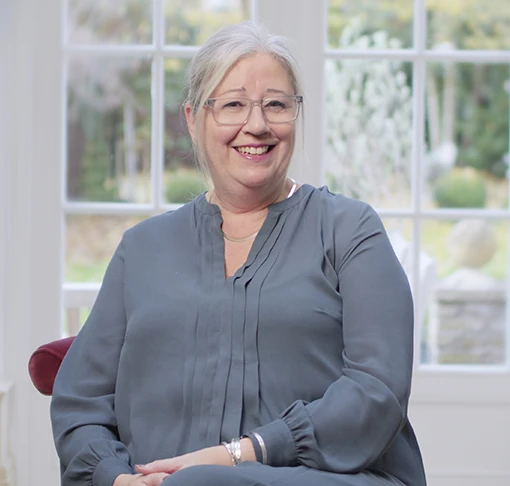
"As a mentor, I've seen first-hand the difference that life coaching can make in my clients' lives. Life coaching provides clients with a well-rounded and comprehensive approach to personal growth and well-being. Overall, combining life coaching with mentoring can provide clients with a more comprehensive and effective approach to personal and professional development, and can lead to improved well-being and success in all areas of their lives."
Paul, Nottingham
Industry-standard accreditations:


Mentoring shares your experience and expertise. Coaching helps the client work out their own. Adding coaching to your mentoring practice gives clients a way to develop their own thinking rather than following yours, which leads to more confident, self-sufficient people in the long run.
Clients often have broad ambitions but struggle to translate them into concrete, achievable goals. Coaching gives them a structured way to set goals that are specific and genuinely theirs, and to build the accountability and follow-through that makes reaching them more likely.
Mentoring clients can lose momentum between meetings. Coaching builds in goal-setting and accountability that keeps clients working between sessions, which means they arrive at each meeting having made real progress rather than waiting to be pointed in the right direction.
Coaching gives clients a set of tools they can use independently long after the mentoring relationship ends: how to set a goal, how to manage a difficult decision, how to hold themselves accountable. These are skills for life, not just the current challenge.
Mentoring focuses on professional development and career progression. Coaching opens up the conversation to personal goals, life decisions and the broader picture of what the client wants from their life. For mentors whose clients are navigating significant transitions, that wider scope matters.
Mentors who can shift between a mentoring and coaching mode build deeper, more flexible relationships with their clients. Clients trust mentors more when they feel genuinely listened to rather than advised, and coaching develops exactly the listening and questioning skills that create that trust.
As an experienced mentor, you already have many of the skills that make a good life coach. You know how to build trust quickly, ask questions that help someone think more clearly, and support a person through a significant professional transition. What a coaching qualification adds is a structured, non-directive framework for working with clients on their personal and professional goals.
Mentoring and coaching are related but different. Mentoring draws on your experience and expertise, sharing what you know to help someone navigate a path you have already walked. Coaching is not about the path you have walked. It is about helping the person in front of you work out the path they want to take. For mentoring clients who are ready to set their own direction rather than follow yours, coaching gives you a different and more powerful tool.
EMCC Global (formerly the European Mentoring and Coaching Council) applies a single competency framework to both coaching and mentoring practice, and a growing number of experienced mentors hold a coaching qualification alongside their mentoring work.
We run a range of free webinars, from our introduction to life coaching to sessions exploring specialist coaching niches. Pick a date and time below to book your place.
We run a range of free webinars, from our 'How to become a successful Life Coach' session to sessions exploring specialist coaching niches. There's no obligation and no sales pressure - just honest answers to your questions.