×

Your cart

Loading cart...

Now enrolling

Association for Coaching
Life Coaching Diploma

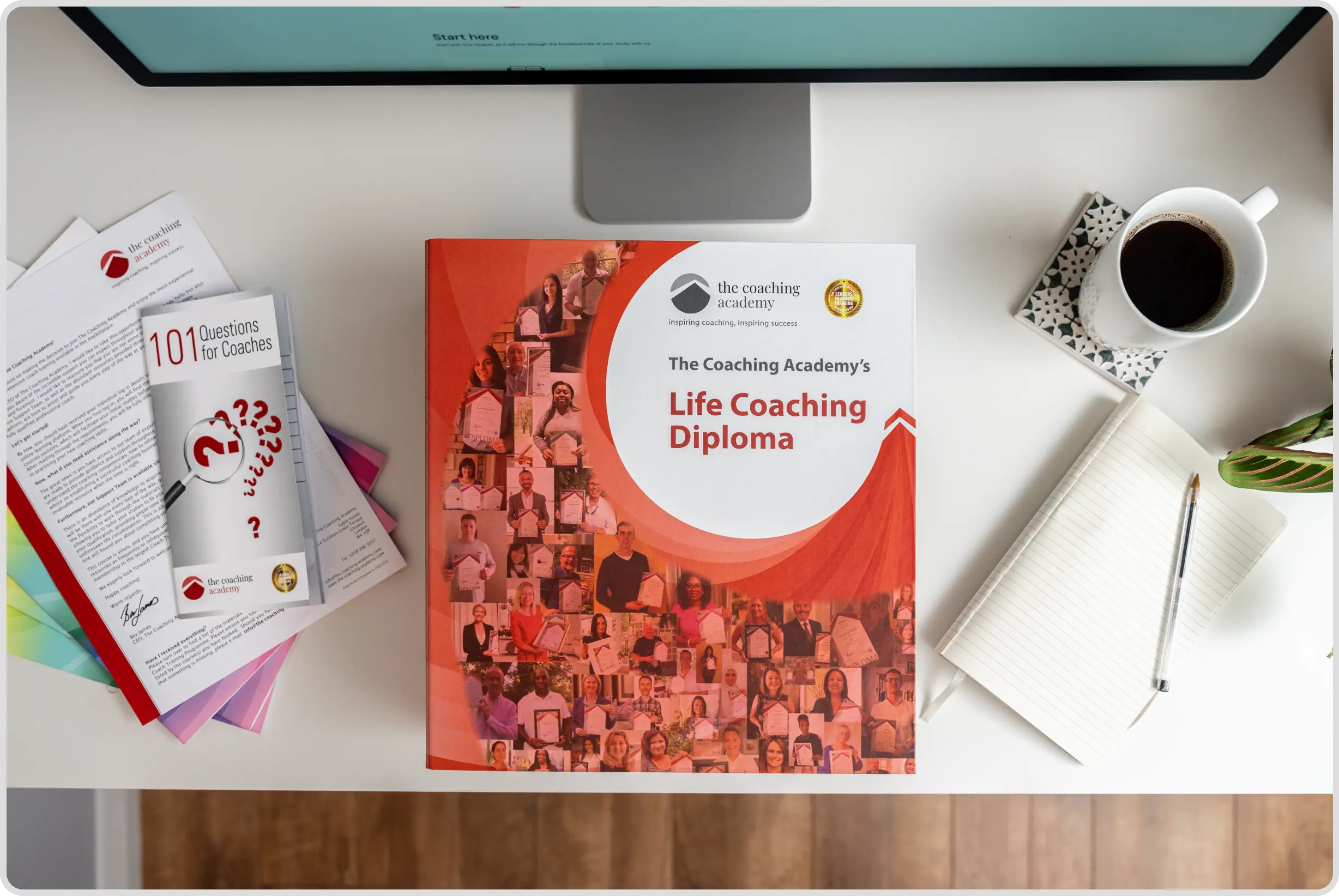
The Association for Coaching pathway of The Coaching Academy's Life Coaching Diploma gives you an internationally respected coaching qualification, accredited by the Association for Coaching, with coaching supervision, a breadth of coaching models, and complimentary AC membership included.

Course Fee

£3,950 inc VAT

Start Date

Flexible

Average Completion Time

9 - 12 Months

Delivery

Live Virtual Classes

Ready to take the next step?

Speak to one of our course advisors and they’ll answer all your questions.
<span>Association for Coaching</span><br />Life Coaching Diploma

Accredited by the Association for Coaching
Find what you need

Course Summary

Scroll to

Course Fees and Financial Support

Scroll to

Course Structure

Scroll to

Benefits

Scroll to

How to Qualify

Scroll to

FAQs

Scroll to

Life Coaching Diploma

Association for Coaching Accredited Life Coaching Course (UK)

Since 1999 we have trained over 14,000 coaches. For most aspiring life coaches, the Association for Coaching pathway is the best route to qualification.

The Association for Coaching Life Coaching Diploma is a comprehensive, professionally accredited qualification for people who are serious about coaching — whether you want to build a full-time practice, add coaching skills to an existing career, or start earning from coaching alongside your current work.

The Association for Coaching is an internationally respected professional body with a strong emphasis on coaching supervision, practical competencies, and ethical practice. It is particularly well-regarded across the UK and European coaching markets, and is recognised by employers, corporate clients, and individual coaching buyers alike.

Our belief is simple: the best coaches combine a genuine desire to help people with a commercial understanding of how to build a sustainable practice. We call it a coaching heart and a commercial mind — and everything in this diploma is built around developing both.

Training is delivered entirely live online, in structured modules alongside your peers. You will not just study coaching theory — you will practise coaching fellow students with professional support throughout, so that by the time you graduate, you have genuine experience to draw on.

Do You Need ICF Accreditation to Become a Coach?

No — many successful coaches build thriving practices without ICF accreditation, particularly when working with private clients or in the UK market.

The Association for Coaching pathway offers a professionally recognised, internationally respected qualification that allows you to start coaching clients as soon as you qualify.

This pathway is ideal if you want to start quickly, build experience, and develop your coaching business without the additional requirements of ICF credentialing — while still gaining a strong, credible accreditation.

What the Association for Coaching Pathway includes

Everything in the core diploma, plus pathway-specific elements designed to meet the Association for Coaching's accreditation standards.

  • Accredited by the Association for Coaching
  • One year complimentary Association for Coaching membership included while studying
  • Coaching supervision sessions to support your development
  • Models of Coaching module — covering OSCAR, CIGAR, CLEAR, STEPPA and more
  • Assessed through observed practice and written assignments
  • Option to upgrade to dual ICF accreditation at a later date (additional cost)

The Association for Coaching pathway is an excellent choice if you want a flexible, accessible route into professional coaching — particularly if you plan to work with individual clients in the UK or build your practice alongside other commitments.

For the vast majority of aspiring life coaches, this pathway gives you everything you need to qualify, start coaching clients, and build a credible business without adding unnecessary complexity or cost at the beginning.

Not sure if the Association for Coaching pathway is right for you? Speak to a course advisor — or compare both pathways.

Everything included in your diploma

Your enrolment fee covers far more than just the qualification itself. Here is everything you get as a student with us.

🚀 Business in a Box

Our dedicated business-building platform helps you set up and grow your coaching practice from day one — covering everything from choosing a business name to marketing, pricing, and getting your first clients.

💻 Online Learning Platform

Access your course materials, module recordings, workbooks, and resources anytime through our dedicated online learning platform — available throughout your entire diploma journey.

🤝 Student Circle Community

Join our private student community where you can connect with fellow students and graduates, share experiences, ask questions, and build your professional network from the moment you enrol.

🎓 30+ Live Workshops

Attend over 30 live online workshops and training sessions, each designed to deepen your coaching skills, explore specialist areas, and give you hands-on practice in a supported group environment.

🧭 Mentoring Sessions

Receive personalised guidance from experienced professional coaches throughout your diploma — helping you refine your approach, build confidence, and develop your own coaching style.

🎯 Supervised Practice Coaching

Complete real coaching sessions under professional supervision as part of your Association for Coaching assessment. By the time you qualify, you will have genuinely coached real people — not just studied how to do it.

🏅 Your Digital Credential

Receive a verifiable digital credential on graduation — linkable from your website, LinkedIn profile, and marketing materials as public, third-party verified proof of your qualification.

Association for Coaching Membership (1 Year Complimentary)

Receive one year of complimentary Association for Coaching membership while studying — giving you access to Association for Coaching resources, networking, and the professional community from day one.

💬 Ongoing Support Team

Access our dedicated student support team throughout your studies — available during weekdays to help with course questions, scheduling, and anything else you need to keep progressing.

Course Fees and Financial Support

We're committed to making your coaching journey accessible with clear enrolment fees, bursary funding options, and flexible payment plans.

Enrolment Fee — AC Pathway

£5,150 £3,950 inc VAT
Fee shown includes a £1,200 enrolment bursary, available for all self-funding students.

Payment Plans

Prefer to spread the cost? We offer flexible, interest-free payment plans so you can train now and pay over time.

Example: Pay £1,975 upfront, then £329 per month over 6 months — completely interest-free.

Bursary Funding

If you are self-funding (rather than enrolling through an organisation) you can access a £1,200 reduction in fees. The fees above include our bursary funding.

Multiple Diplomas

Planning to study more than one diploma? Students who enrol on multiple diplomas receive an effective 35% saving on additional qualifications, making it easier to broaden your expertise and earning potential.

Want to add ICF accreditation later?

AC pathway graduates can complete our ICF add-on at an additional cost to gain dual recognition across both bodies — a flexible way to extend your credentials as your coaching career grows.

Have questions?

Want to discuss payment plans or check whether the AC pathway is right for you? Speak to a course advisor for friendly, no-pressure guidance.
Course Fees and Financial Support

Course Overview

These are some of the core experiences you can look forward to in this course. This programme has been carefully designed to ensure you’re fully equipped to make a meaningful impact in your coaching journey.

A Comprehensive Curriculum

Cover foundational and advanced coaching topics, from goal setting and overcoming obstacles to practical coaching setup, relationship building, and values and beliefs. Explore tools like the DISC personality assessment and various coaching models to build a strong coaching foundation.

Interactive and Flexible Learning

Participate in live, interactive training sessions conducted over Zoom, covering each core module in detail over several days. With no fixed terms or cohorts, you can start immediately and complete the diploma at your own pace, typically within 9-12 months.

Workshops to Build Skills and Connections

Interactive workshops focus on developing specific coaching skills through practical exercises, peer discussions, and collaborative sessions. These allow you to exchange feedback, tackle challenges, and share best practices in a supportive environment.

Mentoring Sessions

Receive personalised guidance through mentoring sessions designed to enhance your understanding, develop your skills, and provide actionable insights to help you grow as a coach.

Practice Coaching Sessions

You will gain hands-on experience by conducting real-life coaching sessions. These practical sessions help you apply learned techniques, build confidence, and refine your abilities in real-world scenarios.

Practical Observations

Submit your practice coaching sessions for our team to review. Receive detailed feedback and actionable insights to refine your coaching approach and improve your effectiveness.

Course Structure

Our core Life Coaching Diploma contains six live online modules that will provide a deep understanding of the theories behind coaching and the benefits it will bring to your life and your clients' lives.

Module Advanced GROW ‘GR’

‘The strongest case for following the GROW sequence with powerful coaching questions is that it is simple, flexible, and it works.’ Sir John Whitmore, co-creator of the GROW model

The GROW model is one of the many tools we teach at The Coaching Academy and is the framework for your coaching sessions. It helps the coach structure the session, moving seamlessly between four stages, and enables the client to identify their goal and the necessary steps to achieving it.

Advanced GR includes six hours of live online training covering the first two stages of the model: Goal and Reality. This will be a chance for you to learn from the experts about goal setting and the first step of helping your clients achieve them.

The first part of the sessions will cover the essentials for helping your client set goals that are positively framed and challenging enough to be inspirational. Through asking questions, a skilled coach can shift a client’s attention towards setting positive, impactful goals.

The second part of the live online training will cover your client’s current situation and the lens through which they look at life, known as the Reality section of the GROW model. With your help, the client can objectively explore their strengths, any support they might have, and any obstacles they may face.

A workbook on the topic will support your learning on the live online training. These exercises help you assess your own life and the many goals you might want to achieve. As coaches, we must also set goals to move forward in our lives and inspire others to do the same. We will therefore introduce you to the ‘Be, Do, Have’ tool that allows you to identify all your potential goals and filter them down into the ones most important to you.

Advanced GROW 'GR' covers the following topics:

  • Core principles of coaching in relation to Goal and Reality
  • Purpose, impact and importance of goals
  • Features of great goals
  • Moving from topic to session goal
  • Deep questioning (Part One)
  • Sequencing questions
  • Summarising and reflecting
  • Understanding reality
  • Completing beneficial reality checks
  • Identifying obstacles to progress
  • How to avoid making unhelpful assumptions
Module Advanced GROW ‘OW’

‘...options are evaluated, obstacles are removed and actions established which are specific, measurable and time-bound with supporters identified and a review scheduled.’ Graham Alexander, author of SuperCoaching

The last two stages in the GROW model are ‘OW’, which stands for Options and Way Forward. During six hours of live online training, you will discover the skills needed to help your client consider all the possible routes to achieving their goal and then narrow them down to specific actions they will take.

Now that your client has set a goal and is aware of their present situation, they must consider all the possible paths they could take to achieve that goal. Using purposeful and insightful questions, you will learn how to fire up your client’s imagination, enabling them to explore all possible avenues. Your trainer will then introduce the techniques used to rank and filter all these options, resulting in your client selecting the actions they will be motivated to take.

The workbook will enhance your learning in this module, where you will find out how to frame questions so they are open rather than closed and also the power of hypothetical and challenging questions. You will also be introduced to limiting beliefs and apply these to your own experiences.

These live online training sessions blend the creative, brainstorming side of coaching and the pragmatic, solutions-focused element. Combined, they will ensure your client is motivated to take action and ready to move to the next step on their journey.

Advanced GROW 'OW' covers the following topics:

  • Core principles of coaching in relation to Options and Way Forward
  • Building and sustaining motivation in clients
  • Questioning techniques to generate options
  • Stepping outside of yourself to consider situations from different perspectives
  • Success strategies
  • Designing actions
  • Helping clients commit to action
  • Deep questioning (Part Two)
  • Motivational approaches when clients don’t complete their actions
  • Dealing with procrastination
Module Empowering The Coaching Relationship

‘Seek first to understand and then to be understood.’ Dr Stephen R. Covey, author of 7 Habits of Highly Effective People

The skills learnt in these six hours of live, online training support the framework of the GROW model. We cannot only have a structured coaching session – we also need additional skills to strengthen the relationship between our client and us. Your experienced trainer will help you explore the difference between empathy and sympathy, introduce you to ‘active listening’ and how to respond to clients in a truly non-judgemental manner.

During this training, you will also think about how to challenge a client’s assumptions, helping them to develop a greater awareness of themselves and their actions. You will also look at the technique of reframing – a vital tool that allows us to consider a whole new perspective. Emotional clients can be a significant challenge for even experienced coaches. As you coach clients through key life challenges, it is not surprising that emotions can be stirred – and dealing with this sensitively and with boundaries in place is crucial. Your trainer will teach you vital techniques for this and the importance of the coach retaining control of their coaching sessions.

Your learning will also be supported by the workbook on this topic, where you will explore how your choice of language can help you build rapport with your client. Through several exercises, you will consider the power of tempo and tone, the impact of sensory language and how listening is a skill we can all improve.

Empowering the Coaching Relationship covers the following topics:

  • Building rapport
  • Establishing trust
  • The psychological contract
  • Creating complete attention
  • Pacing the session
  • Expressing empathy
  • Being non-judgemental
  • Active listening
  • Challenging clients
  • Reframing
  • Developing awareness in clients
  • Dealing with client emotions
  • State management for coaches
  • Retaining control of sessions
Module Introduction to DISC Personality Profiling

‘The self-knowledge that results from DISC will have an immediate and profound impact on your ability to understand, communicate and work with others.’ Bev James, CEO of The Coaching Academy and author of ‘Do it! Or Ditch it.’

Would you like to be able to understand people in minutes rather than months? How much would your coaching improve if you understood your client’s perspective better? Would you like to know what drives you and why you react to situations in a certain way? All of this can be done with the help of DISC.

During your six hours of live online training, you will be introduced to the personality profiling tool known as DISC. Your experienced trainer will guide you through the four DISC personality types and provide you with a firm foundation in using it in all areas of your life. DISC profiling is also an invaluable coaching tool, enabling you to build rapport with your clients by understanding how best to communicate with them.

It is also beneficial to understand your own DISC profile when setting up your business or using your coaching skills in the workplace. Once we know what makes us feel comfortable and what challenges us, we can understand how best to utilise our innate skills and be alert to what we might need to work on.

The DISC workbook supports this understanding by enabling you to assess your own DISC profile and what this means about your personality traits, drivers, preferred communication style and strengths. This will help you personally, with friends and family, as well as professionally.

Introduction to DISC personality profiling covers the following topics:

  • How to identify different personality styles
  • How to administer a DISC profile
  • How to use DISC in a coaching session
  • Practical applications of the DISC tool for coaches
  • How to communicate effectively with different personality styles
  • How to use DISC as a marketing tool to grow your coaching business
Module Practicalities of Getting Going as a Coach

‘Amateurs practise till they get it right. Professionals practise till they can’t get it wrong.’ Peter Thompson, business growth strategist

At The Coaching Academy, our belief is ‘coaching heart, commercial mind’. If you want to set up a successful coaching business, these six hours of live online training will help you take your first steps into the practical side of working as a coach. New coaches need the theory behind coaching, but they also require advice on engaging and securing clients.

Your trainer will have their own successful coaching business and will share tips on navigating the steps between enquiries and contracts. This will include explaining what coaching is so that clients will want to sign up with you straight away, how to deal with enquiries, and what information you should provide to potential clients and include in contracts.

We will also cover how to run a successful intake session, whether you should charge for it and how to ensure your client stays ‘on topic’ during this first session. Your experienced trainer will also cover what paperwork you need, how to structure several sessions and whether your client would benefit from completing exercises in between sessions.

Your learning will be supported by a workbook covering the qualities of a good coach and the exercises needed to assess your skills in these areas. There are also practical tips, tools for the intake session, and activities to help strengthen your focus during coaching sessions and remove all external and internal distractions.

The Practicalities of Getting Going as a Coach covers the following topics:

  • Responding to telephone enquiries
  • Explaining coaching and managing expectations
  • Pre-contract information
  • Contracts/agreements
  • Running an intake session
  • Keeping control of sessions
  • Not giving advice
  • Looking after your own energy
  • The image of a professional coach
  • Building a series of sessions
  • Beginnings and endings of the coaching journey
  • Setting homework and exercises
Module Values and Beliefs

‘The most important opinion a person will ever hold is the one that they hold about themselves.’ Anthony Robbins, personal development expert

How important are our values when it comes to goal setting? How do our beliefs hold us back or help us to achieve our goals? Both of these questions need answering because at the core of every goal is a value, and inside every client are their beliefs.

During this module, you will have six hours of live, online training sessions that begin by defining values and beliefs and their significant role in forming a client’s mindset. Values are important as many people are unaware of their true values, and these must align with their goals, or they won’t be motivated to complete them. Beliefs are equally important because if we hold limiting beliefs about our capabilities, we won’t be confident that we can achieve our goals.

Your experienced trainer will explain the techniques needed to raise your client’s awareness of their values. Through our training, you will gain the confidence to challenge your client’s thinking, enabling them to turn their limiting beliefs into more empowering thoughts and behaviours. A crucial aspect of this module is growing confidence to deliver real change for yourself and those you are coaching.

Your learning will be supported by the module workbook, which contains all the necessary exercises to discover your driving values and how they impact your choices. Similarly, there are exercises to help you recognise which of your own beliefs might be holding you back. Identifying limiting beliefs is often one of the most powerful experiences for new coaches taking our Life Coaching diploma.

Values and Beliefs covers the following topics:

  • Definitions of values and beliefs
  • Alignment of values and goals
  • Importance of values for both coach and client
  • Role of beliefs in both coach and client
  • Identifying limiting beliefs
  • Overcoming limiting belief
  • Building confidence in both yourself and your clients
Module Models of Coaching (AC Pathway Only)

In expanding your knowledge and skills as a professional coach, it is important to be aware of a range of coaching models that can support you to structure a coaching session.

During this 6-hour live online training module you will be introduced to a selection of coaching models, and be allowed to develop your knowledge and understanding, as well as a space to practice their use.

In part 1, you will explore what we mean by ‘coaching models’, and how these can support effective engagement with your clients. Your trainer will introduce you to the GROW model and explain why this is The Coaching Academy’s key framework for assessment and model of excellence. Before delving deeper into other models of coaching, you will touch upon Motivation, and how this serves as a guiding force for all human behaviour. Understanding motivation can be a key component to successful coaching, allowing the coach to have an increased awareness of how and what helps clients feel motivated. As part of this session, you will be introduced to the Motivation Matrix, which can be a useful tool in framing your conversation with clients.Part 1 is also where you will learn about your first model of coaching (outside of GROW). Your trainer will guide you through Whittleworth & Gilbert’s 2002 OSCAR model of coaching, as you are taken on a journey through its background and history, as well as what this model can be used for. There will be plenty of time to put your new knowledge into practice, through small group exercises.

In part 2, you will learn about the CIGAR model of coaching, which, as a useful alternative to GROW, reflects how a session often begins; with the client bringing their reality first. Peter Hawkins’ CLEAR model is next up, as your trainer will help you to explore its origins. A predecessor of GROW, it is still considered a functional alternative for managers and coaches, placing a strong emphasis on the need for coaching and mentoring in today’s fast and competitive business environment to promote employee growth.

You will start to understand the subtle nuances and differences in each model, for example, unlike other coaching models where there is a structure to them, in CLEAR there are elements that could occur at any time, making it a more fluid way of coaching. You will once again have plenty of opportunities to put your learnings into action, as your trainer facilitates lots of interactive activities and practice coaching.

In the final session, Part 3, you will take a look at the STEPPA model, developed by world-renowned coach and instructor, Dr. Angus McLeod. This model is primarily utilised as a technique when there are difficult emotions in play which need to be overcome, acting as a framework to assist coaches both during coaching sessions and afterward to reflect upon coaching practice. You will develop an understanding of the areas where STEPPA can be most useful, as well as the types of questions that can be used within your coaching. As a group, you will look at the benefits and drawbacks of this model, as well as the time to put it into practice.

Your learning is supported by an accompanying module workbook, as well as an interactive handout. Your trainer will facilitate lots of interactive exercises, group discussions, and practice throughout, as well as share their own experiences and knowledge, to provide a well-rounded and informative module. By the end of this session, you will have a more rounded understanding and awareness of how using models can provide an effective framework for your coaching, as well as how subtle differences can be used within different coaching environments.

How to Qualify — Association for Coaching Pathway

There are 4 clear steps to qualifying:

  • Complete the Modules - Work through the online modules, live workshops, and supporting resources, including the Association for Coaching-specific Models of Coaching module.
  • Attend Live Training Events - Participate in scheduled live training sessions.
  • Practice Live Coaching - Conduct live coaching sessions, some of which will be observed for feedback. Maintain a learning log to track your progress.
  • Final Submission Paper - This paper consolidates your knowledge from coaching sessions, modules, webinars, independent research, and reading — assessed against Association for Coaching standards.

Remember you work at your own pace, fitting the programme around your life, qualifying in a timeframe that suits you.
How to Qualify

Not quite ready? Come and meet us first.

If you're still weighing up whether life coaching is right for you, or you'd simply like to meet our trainers and ask questions before you commit - our free introductory webinars are the perfect next step.

We'll cover what life coaching is and isn't, what you'll learn in the diploma and how long it takes, how our graduates get their first clients, and anything else you want to know. There's no obligation and no sales pressure - just a genuine chance to find out if this is the right fit for you.

Click a date and time below to book your place.

What can your qualification lead to?

Launch a Business

Build your own coaching business, offering personalised one-on-one sessions or group coaching programmes tailored to your clients’ needs.

Elevate Your Skillset

Learn how to utilise coaching techniques to refine your communication, improve your leadership abilities, and boost your personal and professional impact.

Secondary Income Stream

Start a part-time coaching business alongside your current role, helping others achieve their goals while earning additional income.

Become an In-house Coach

Provide coaching within organisations, supporting employees to improve performance, enhance wellbeing, and achieve their potential.

Enhance Your Life

Use coaching principles to set meaningful goals, boost confidence, and make lasting improvements across all areas of your life.

FAQs

Here are a few of our commonly asked questions, but if you have anything not covered, use the button below to book a consultation call with our course advisors.

When are the live training dates?

You can view the live training dates for each module here.

How much do life coaches earn?

Life coach earnings vary depending on experience, niche, location, and how many clients they work with.

  • New life coaches typically earn between £30 to £75 per hour.
  • Experienced coaches often charge £100 to £200 per hour.
  • Those working in executive or corporate coaching can charge £250+ per hour.
  • On average, full-time life coaches in the UK earn between £40,000 and £80,000 per year, with top earners exceeding £100,000 annually.

Income can grow significantly with a strong client base, specialisation, and group or online coaching programs.

How much work will I have to do?

This varies from student to student, depending on how much additional reading they wish to do around the modules and the time they have given themselves to complete the course. We recommend that all our students put aside three hours a week for their studies, but this is a suggestion rather than a requirement.

What are the stages to qualification?

For the core course, we ask that you attend a set number of live online training sessions, carry out a minimum number of coaching sessions and submit recordings of five of them for assessment. There is also a short, written assessment at the end of the core course. Each accreditation pathway will also have additional requirements, which are explained above.

Is the diploma internationally accredited?

Our Life Coaching Diploma is International accrediated by both the Association for Coaching (AC) and the International Coaching Federation (ICF)

What is the difference between ICF and Association for Coaching accreditation?

Both are respected professional coaching bodies. The ICF is the global benchmark, widely recognised by corporate and international clients, while the Association for Coaching is highly regarded in the UK and Europe and offers a more flexible route into coaching.

Do I need ICF accreditation to become a life coach?

No. You can become a successful life coach without ICF accreditation, particularly if you work with private clients. ICF is more important if you plan to work with organisations or internationally.

Which life coaching pathway is best for most beginners?

For most aspiring life coaches, the Association for Coaching pathway is the best starting point. It gives you a respected qualification, practical coaching experience, and a more accessible route into professional coaching, with the option to add ICF later if needed.

Is ICF accreditation worth it?

ICF accreditation is valuable if you want to work with corporate clients, organisations, or internationally. It provides a globally recognised credential and aligns your coaching with professional standards. For many private-client coaches, however, it is not essential when starting out.

How long does it take to qualify as a life coach?

Most students complete the Life Coaching Diploma in 9 to 12 months, depending on their pace of study and availability.

Does The Coaching Academy offer payment plans?

Yes, we offer payment plans for all diplomas and programmes, which can be customised to meet everyone's needs.

Can you do multiple courses at the same time?

Yes the good news is that the courses are designed so you can achieve your desired outcome as soon as possible, the combination allows this plus you have your own personalised tailored platform to work from.

What if I can't attend all the live training sessions?

All our courses are designed to fit into a busy schedule, we run the training modules regularly so if you miss a session you can jump into the next session.

How will I be able to get clients?

The Business in a Box program covers all the essentials—choosing a business name, setting actionable goals for finances, marketing, and sales, and more.

The platform includes ready-to-use templates, helpful tools, and business check-in videos designed to help you grow your practice and market yourself effectively.

We’re dedicated to your success—let’s build your coaching business together.

How long does it take to qualify?

You have 3 years to complete each course, usual completion of each course is 9 - 12 months. Hours will vary, and you have full flexibility with the courses, estimate weekly time is estimated between 3 and 5 hrs a week depending on your knowledge and learning style.

I've never run my own business. Will this hold me back?

The majority of the people who train with us have never run their own business, so you are not alone! Throughout the training we'll teach you the necessary steps to build a successful and thriving coaching business.

Can I switch pathways after enrolling?

Yes. Students who start on the Association for Coaching pathway can upgrade to the ICF pathway later, allowing flexibility as your coaching career develops.

Which coaching accreditation is best for private clients?

For coaches planning to work mainly with private clients, the Association for Coaching pathway is usually the most practical choice. It is respected, flexible, and gives you everything you need to qualify and start coaching professionally.

Can I become a life coach with the Association for Coaching pathway alone?

Yes. The Association for Coaching pathway is a complete, professionally accredited life coaching qualification that enables you to train, qualify, and begin working with clients without needing ICF accreditation first.