Your cart
Loading cart...
Your cart
Loading cart...
Events & Workshops
Learn & Explore
Student Stories - 09 Nov 2026
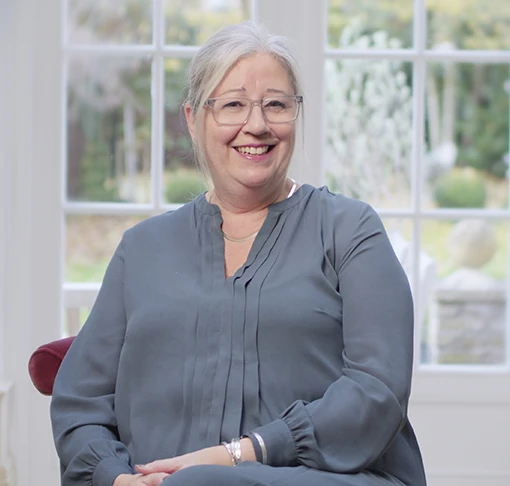
In this Student Story, Julia Selkovenko shares how years of helping organisations navigate technological and commercial change led her to coaching. She reflects on completing her qualification alongside a demanding consulting career, what she has learned about creating space to think, and why she is now focused on helping professionals work through the questions AI is raising about careers, expertise and identity.
After years of helping organisations navigate technological and commercial change, I noticed a pattern: the strategy was rarely the hardest part. The difficult conversations were. The uncertainty was. The question of who people needed to become was.
Leaders are increasingly expected to make decisions without an established playbook, and nowhere is that more apparent than with AI. Coaching became a natural extension of my work: another way to help people navigate the human side of change that is moving faster than most of us can process.
Coaching has made me much more conscious of the difference between being busy and actually moving in a direction that matters. It has encouraged me to question some of my own assumptions about success, achievement and what my career was “supposed” to look like. It has also given me a greater appreciation for creating space to think before reacting - something that becomes increasingly important when the ground keeps shifting around us professionally. As someone who has spent much of my career advising others, becoming a coach reminded me that sometimes the most valuable thing you can offer someone isn’t an answer. It is a better question and an opportunity to reflect.
I found The Coaching Academy while looking for a rigorous way to develop my coaching capability alongside my existing career. A friend of mine, who was doing a psychology degree at the time, recommended I join The Coaching Academy’s Introduction to Life Coaching free live webinar. I wasn’t looking to reinvent myself overnight; I wanted to add another dimension to the work I was already doing with leaders and organisations. I joined The Coaching Academy’s Introduction to Life Coaching free live webinar, led by Mike Blissett, and genuinely enjoyed it. The programme seemed well structured and aligned with what I was interested in, alongside mandatory practice. The qualification gave me a strong foundation while allowing me to explore how coaching could complement my experience in digital transformation, leadership, business and human behaviour.
Consulting is not a nine-to-five career, so completing the qualification required discipline and deliberate planning. I had to protect time for study, webinars and practice alongside a demanding professional schedule and international travel. Sometimes it meant completing assignments on a plane, joining webinars straight after a demanding RFP submission, or fitting practice sessions in between client meetings. Treating the qualification as a genuine commitment rather than another item on a to-do list made the biggest difference. It also taught me something I now bring into my coaching: meaningful change requires creating space for it and being intentional about what you allow to compete for your attention.
I love The Coaching Academy's training framework - the impact of business school and a consulting career - but equally, the practical coaching exercises, feedback and opportunities to practise with others were particularly valuable. I also found the introduction to systemic thinking especially interesting, because it connected naturally with my experience of working with organisations and understanding how people are shaped by the systems and relationships around them. Combining the formal training with wider reading around psychology, mindset and human behaviour also helped me develop my own perspective. The biggest lesson for me is that coach training doesn’t end with qualification. It is an ongoing practice of becoming a better listener, asking better questions and staying genuinely curious about how people think, behave and change. I have definitely become a better listener - including at spotting what’s left unsaid.
I use my coaching skills with professionals in demanding environments navigating significant change - increasingly including the questions AI is creating around careers, expertise and positioning. My background in marketing and transformation gives me a close view of how technology is changing organisations, roles and business models; coaching allows me to work through the individual questions underneath that shift. What happens when a role you’ve built your identity around starts to change? How do you remain valuable when the expertise that made you successful is becoming more accessible? And perhaps most importantly: what do you want to become next?
For me the most rewarding part of my coaching journey is watching a conversation change the way someone sees a problem. Someone can arrive believing they have a problem with their career, circumstances or environment, and through questioning discover that the real issue is an assumption they have been carrying about themselves. I am particularly drawn to people navigating significant change because those moments can create enormous opportunities for growth. Being able to create a space where someone can step back, think differently and recognise possibilities they hadn’t seen before has been one of the most rewarding parts of the journey. It was particularly rewarding to see two colleagues I coached and mentored receive a promotion within six months. Good coaching isn’t about giving someone the perfect answer. It is about helping them see their choices more clearly and giving themselves permission to consider a different path - one that may suit them better.
I am fascinated by human transformation in the age of AI, particularly what it means for identity, expertise and resilience. Technology is changing not only the tasks people perform but also how organisations are structured, how expertise is valued and how people build a career, a business or simply a working life that holds up under constant change. I am interested in what this means for confidence, positioning and our sense of professional value. The people who adapt best won’t necessarily be the ones with the deepest technical knowledge of AI; they will be the ones who can navigate uncertainty, ask better questions and reposition themselves deliberately rather than react. The question I keep coming back to is: if AI changes what the world needs from us, how do we consciously decide what we want to become next?
My professional work has already involved helping organisations think through transformation, technology and the impact of AI - including speaking on resilience in the AI era, most recently at an executive dinner exploring what AI means for how leaders think and operate. I am currently dedicating more time to building a community where ideas and experiences can be shared beyond one-to-one and in-house conversations. Drawing on my marketing and transformation background, I am creating content, frameworks and programmes that let far more people explore these questions for themselves and build practical tools for navigating change.
Ultimately, I want to help ambitious people turn disruption into an opportunity to rethink their career, their business or the way they work - rather than waiting for someone else to make that decision for them.
Coaching isn’t about abandoning everything that came before it. For me, it is about bringing together transformation, technology, business, leadership and human behaviour to help people navigate a world where many of the old rules are changing. AI is undoubtedly reshaping jobs, organisations and careers, but I don’t think the most interesting question is simply what AI will replace. It is what AI is making possible - and what we choose to do with that opportunity. That is the conversation I want to keep exploring: helping people not simply adapt to change, but use it as a catalyst to rethink what they want their next chapter to look like, and deliberately shape what comes next.
Coaching is such a valuable complement to advisory work: strategy can identify what needs to change, while coaching creates the space for a person to understand what they may need to change in themselves to actually make it happen.
Thank you to Julia for sharing how coaching can build on a career rather than replace it.
We run a range of free webinars, from our 'How to become a successful Life Coach' session to sessions exploring specialist coaching niches. There's no obligation and no sales pressure - just honest answers to your questions.