Your cart
Loading cart...
Your cart
Loading cart...
Events & Workshops
Learn & Explore
Whether you want to bring coaching skills into your HR practice or take a fully accredited qualification and move into life coaching, this page covers everything you need to know about coaching training for HR professionals. The Coaching Academy has trained over 14,000 coaches and is the UK's leading life coaching training academy. Our Life Coaching Diploma is accredited by the AC and ICF, delivered entirely through live online classes, and built around the schedules of professionals.

Life coaching gives HR clients a structured way to move forward across the areas that matter most to them. For clients focused on career development, coaching helps them identify where they want to go and build a realistic plan for getting there, something that performance reviews rarely have time for.
Managing the demands of work and personal life is one of the most common challenges HR professionals encounter. Coaching gives clients practical tools for setting boundaries, managing energy and making deliberate choices about how they spend their time, which tends to reduce stress more effectively than advice alone.
Communication is at the heart of most workplace challenges. Coaching helps clients develop the self-awareness to understand how they come across, and the skills to have the conversations they have been avoiding. The same applies to leadership: coaching gives potential leaders the space to develop decision-making, problem-solving and team-building capability in a way that a training course alone cannot replicate.
For clients dealing with setbacks, change or uncertainty, coaching builds resilience. Not as a concept but as a practical skill: knowing how to reframe a situation, manage their response and keep moving forward.
Hear from our students about their experience.

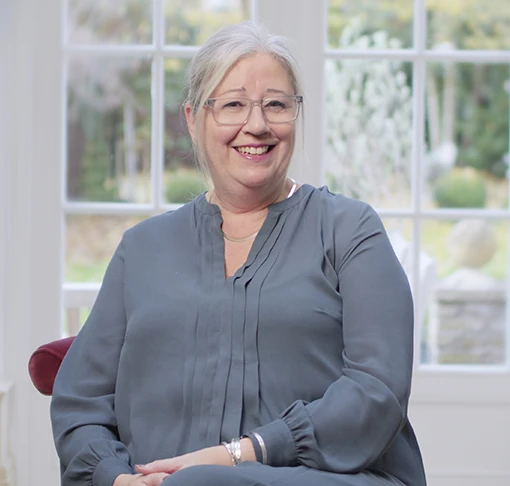
"As a HR professional, I've seen first-hand the difference that life coaching can make in my clients' lives. Life coaching skills can be highly beneficial for HR professionals when working with clients, as they can help the HR professional to build a strong, trusting relationship with the client and utilise active listening skills to fully understand the client's situation and needs, and to provide more personalized and effective support."
Brenda, Belfast
Industry-standard accreditations:

Employees who feel genuinely supported in their development tend to stay and perform better. Coaching gives HR professionals a structured way to invest in individuals, signalling that the organisation values them as people rather than just as resources.
Managing the competing demands of work and personal life is something most employees struggle with at some point. Coaching gives them practical tools to set boundaries, manage their energy and make deliberate choices about how they spend their time.
Poor communication sits at the root of most workplace conflict. Coaching helps employees understand how they come across, develop more effective listening skills and have the conversations they have been avoiding, which leads to better working relationships across the board.
Coaching helps employees get clear on what matters, manage their time more deliberately and develop strategies for handling distraction and pressure. The result is not just more output but more focused, sustainable performance.
Coaching is one of the most effective ways to develop leadership capability. For HR professionals supporting succession planning or talent development, it gives potential leaders the space to build decision-making and problem-solving skills in a way that a training course alone cannot replicate.
Whether an employee is preparing for promotion, returning from leave or navigating redundancy, coaching helps them think clearly about what comes next. HR professionals with coaching skills can support these transitions in a way that a standard process cannot.
As an HR professional, you already use many of the skills that make a good life coach. You are skilled at having difficult conversations, helping people work through problems, and supporting individuals through change and uncertainty. What a coaching qualification adds is a structured framework for working with people in a way that is forward-focused, goal-led and driven entirely by what the person in front of you wants to achieve.
HR work and coaching cover different parts of the same employee journey. HR deals with policy, compliance, performance and the organisation's needs. Coaching works with the individual's goals, motivations and development. For employees who are stuck, underperforming or navigating a significant transition, coaching gives you a different and often more effective way in.
Coaching is increasingly recognised as a core skill in the HR profession. The Chartered Institute of Personnel and Development (CIPD) identifies coaching as one of the most effective tools available to people professionals.
We run a range of free webinars, from our introduction to life coaching to sessions exploring specialist coaching niches. Pick a date and time below to book your place.
We run a range of free webinars, from our 'How to become a successful Life Coach' session to sessions exploring specialist coaching niches. There's no obligation and no sales pressure - just honest answers to your questions.